
Gardening is a fun hobby that is refreshing and can easily be inexpensive. Here are some easy ways to get free plants and seeds for your garden!
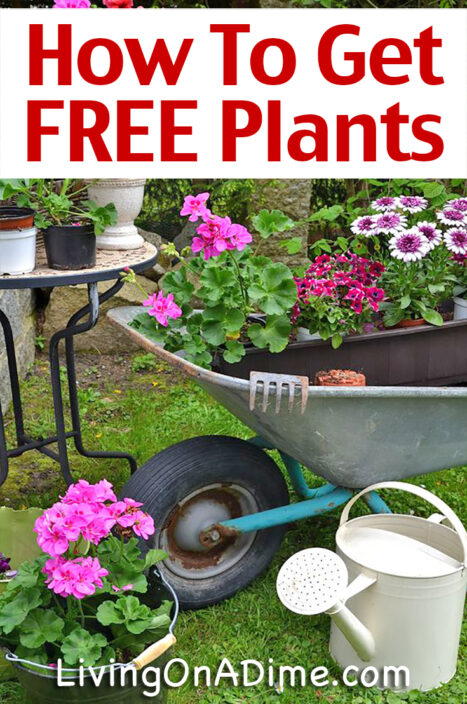
How To Get FREE Or Cheap Plants and Seeds
Since we’re moving and I can’t have a garden this year I am going to live vicariously through the blog and share all my gardening tips. I do have all the plants I’m taking in pots so they’re ready to go. The “few of my favorites that I just have to take” turned out to be about 20 pretty large containers of plants. I think I have one very full carload of plants alone! If you are just starting out with a new garden, check out these tips to help you save when getting plants.
-Tawra
How To Find Inexpensive Plants
- Talk to the manager if you see plants at a store that are in bad shape but not dead. Ask him if he will give you a “deal” if you take them off his hands. Most of the time they will give you a deal because the plants look bad and they don’t want to mess with them anymore. Last year I was able to purchase over 50 large half-gallon to gallon-sized perennials for $50. (over $600 retail) All but about five of them lived and I was able to take those back to the store and get my money back. Most home improvement and discount stores have a guarantee that if your plant dies within one year, you can bring the dead plant and the receipt and they will give you your money back or give you a new plant.
- Trade plants with friends. Divide your plants or get divisions from your family. We divided four hostas over two years to get over 30 plants. If you see someone digging in their garden and throwing out plants, ask if you can have them. Most people are more than willing to give you their extras.
- Plant zinnias and marigolds in areas where you want a lot of color with little fuss. Just work the soil, put the seeds down and by early summer you’ll have lots of flowers. You can have cut flowers all summer!
- Many ladies are familiar with the cookie swaps, where you each bring five dozen cookies and trade. Try organizing a plant swap with cuttings/starters of different plants using the same concept.
From: Megan
- We have a local adult service for the developmentally handicapped. They have a greenhouse where they sell plants, herb and vegetable seedlings, and even fruits and vegetables that they raise (for job training). The cost is half or less than that of any of the stores in town. They will often give you a free plant in exchange for giving them your old plastic pots.
- Our local technical college has a horticulture program. Twice a year they have greenhouse sales and the selection and prices are terrific. Get on the department’s email list and get there early. Some high schools do this, too.
- Our county has a website set up like Freecycle that will connect people who want to give away or swap plants, seeds, etc.
- Don’t overlook the obvious: Buy seeds and plants at grocery and drug stores. Right after Mother’s Day, they move it all out for the July 4th sales. I just bought name-brand $1.99 seed packets for 10 cents a pack and some already bloomed flowers for $1.00 a plant, regularly $20. Once in the ground, you can give them some water and TLC and they will bloom again.
- Post on marketplaces like Facebook Marketplace and Craigslist for any plants or gardening needs. You may have to do a little digging.
- Check with your local Native Plant Society. They try to secure permission from developers to remove native species prior to development. Yes, you will have to dig these up. They often have extra native plants and they are suitable for your climate.
Dividing Plants
From: Linda
We save money on gardening by cloning a lot of plants. While some plants clone easier than others, a great many can successfully be duplicated.
For example, your neighbor may have a bush or flower that you really admire but don’t want to pay what it costs from the store. Ask if you can take a cutting from their plant. Since you only need a small piece, most folks are happy to oblige.
You want to snip off a piece from the tip of a branch consisting of several leaves. Wrap the end in a wet paper towel and, once home, strip off any lower leaves to leave a stem. Put this in a small pot of high-quality potting soil and water.
Four-inch pots work well for cloning. Make sure your pots can drain water and keep moist! A little water every day or so is good. You just need to keep the stem moist so it will start putting out roots. You can use a root-stimulating product, but we don’t. For plants difficult to clone, like roses, I imagine it would be worthwhile. You dip the stem in the stimulator, then plant. Some folks advise covering clones with plastic to hold in moisture. We’ve tried that but had lots of problems with mold.
After your plant is well rooted you can plant as usual.
Note from Tawra:
A root stimulator is a very good idea. It’s about $3 for a small bottle which will last the rest of your life! All you do is dip the end of the stem into the powder and then put it into the soil in the pot. I have found that this will save a lot of frustration and greatly speed up the time it takes for the plants to be ready.
One great way to get free plants!
The best thing I have found is to talk with friends, family, and neighbors to see if anyone will “split” some of their perennials with you! Get in touch with a local church or the elderly community and see if they need help in the garden in exchange for starters. Having the company would surely please the elderly, and will give you a lot of tips and tricks from long ago. It will do both of you good… inside and out!
Good Luck!
-Felina
[dining]


 BEST Homemade Potato Salad Recipe EVER!
Leave a Reply